


For those who don’t know me, hi! I’m Michael Mathieu, and I’ve been dancing West Coast Swing for about 14 years and doing photography for about seven months. I’ll write a proper introduction another time, but for now, here’s my dance photo story.
I’m going to include a lot of photos here. For older photos, I’m re-editing - I like my current style as of October 2026, and I’m allowing my photos to evolve over time. I’m also not really talking about anything technical here, just the photos I’ve captured - I’ll dig into more technical things another time.
In mid-April, exactly six months ago, I brought my new Canon R6mkII and wildlife lens to the Asia WCS Open in Singapore. It was the beginning of a grand journey.
At the time, I didn’t have any idea I would build an Instagram account dedicated mostly to portraits in the West Coast Swing community, or that so many people would carry my photos in their wallets and phone cases.
In this post and the next, I want to give a high-level overview of my journey so far.
Asia WCS Open, April 2026
I had never taken dance photos before, and I was only two months into my photography journey overall, but the event director, Tze, liked my portfolio and let me take photos from the sidelines, as long as I didn’t interrupt the staff photographers.
I quickly found that I loved tight portraits of people, especially capturing interesting moments or emotions. Joy came up the most, as one would hope at a dance event.
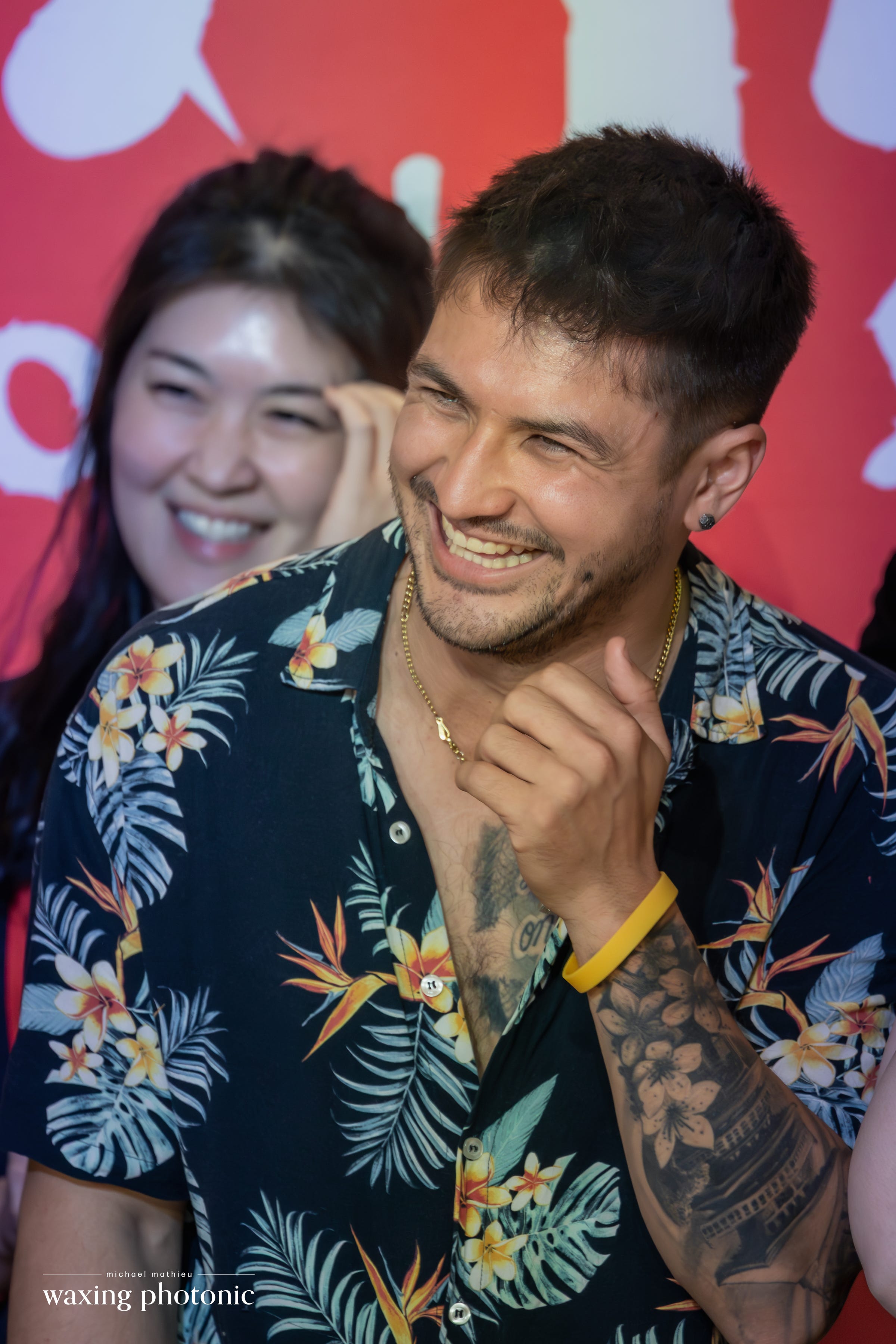
My first portrait that I was truly happy with was of Zac. A moment of joy during the staff introductions, probably as Tze was making a joke on the mic. Zac proved to be a great subject to learn from over the weekend, and he was always encouraging me.
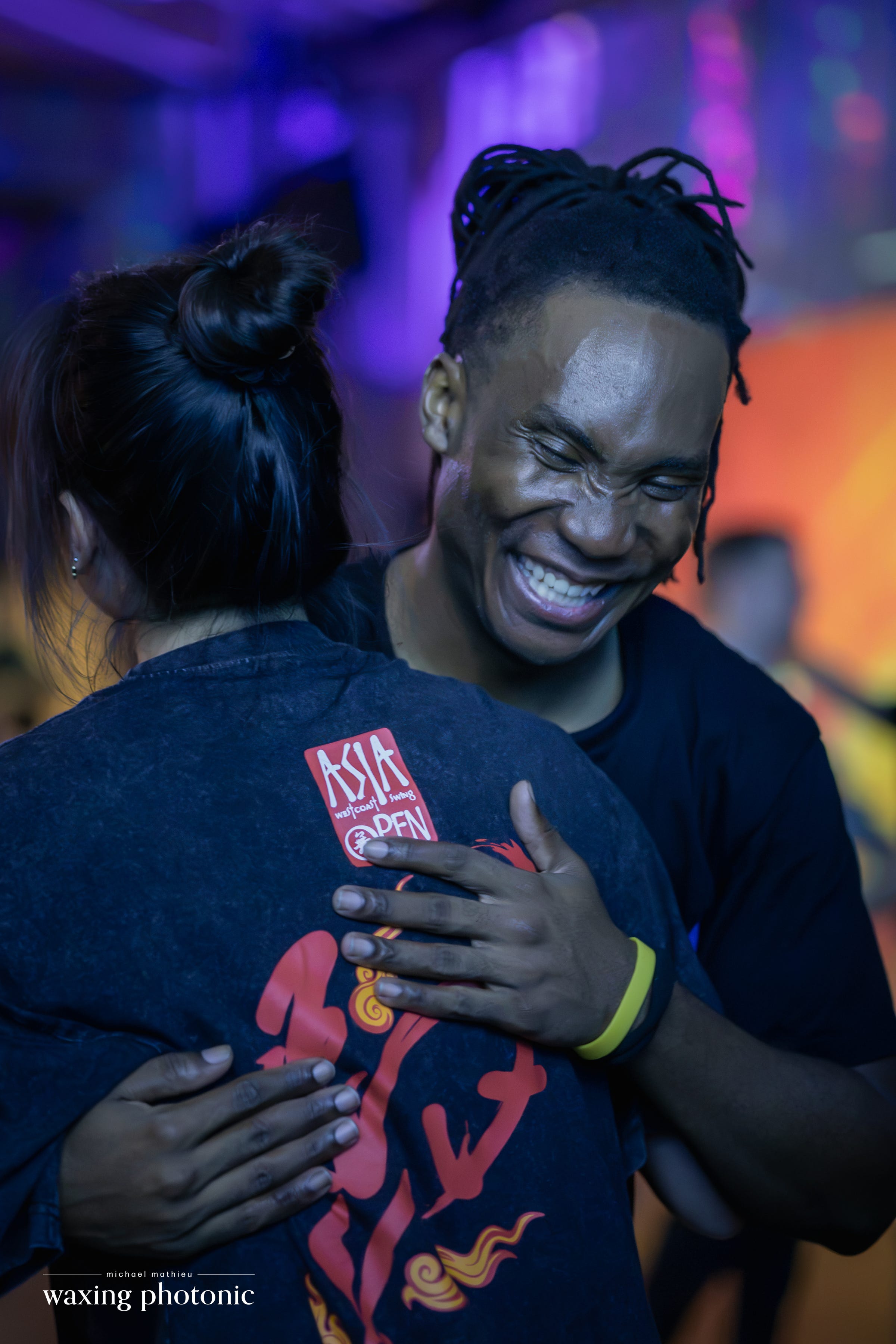
I spent the first evening trying to home in on what makes a good social dancing moment, and I mostly settled on the moment after the dance - when the joy is apparent as two people hug and go their separate ways. This is in part because I just didn’t understand the timing of photos within dance well enough yet. Khayree is a human vibe, and has been for as long as I’ve known him, as one can see here.
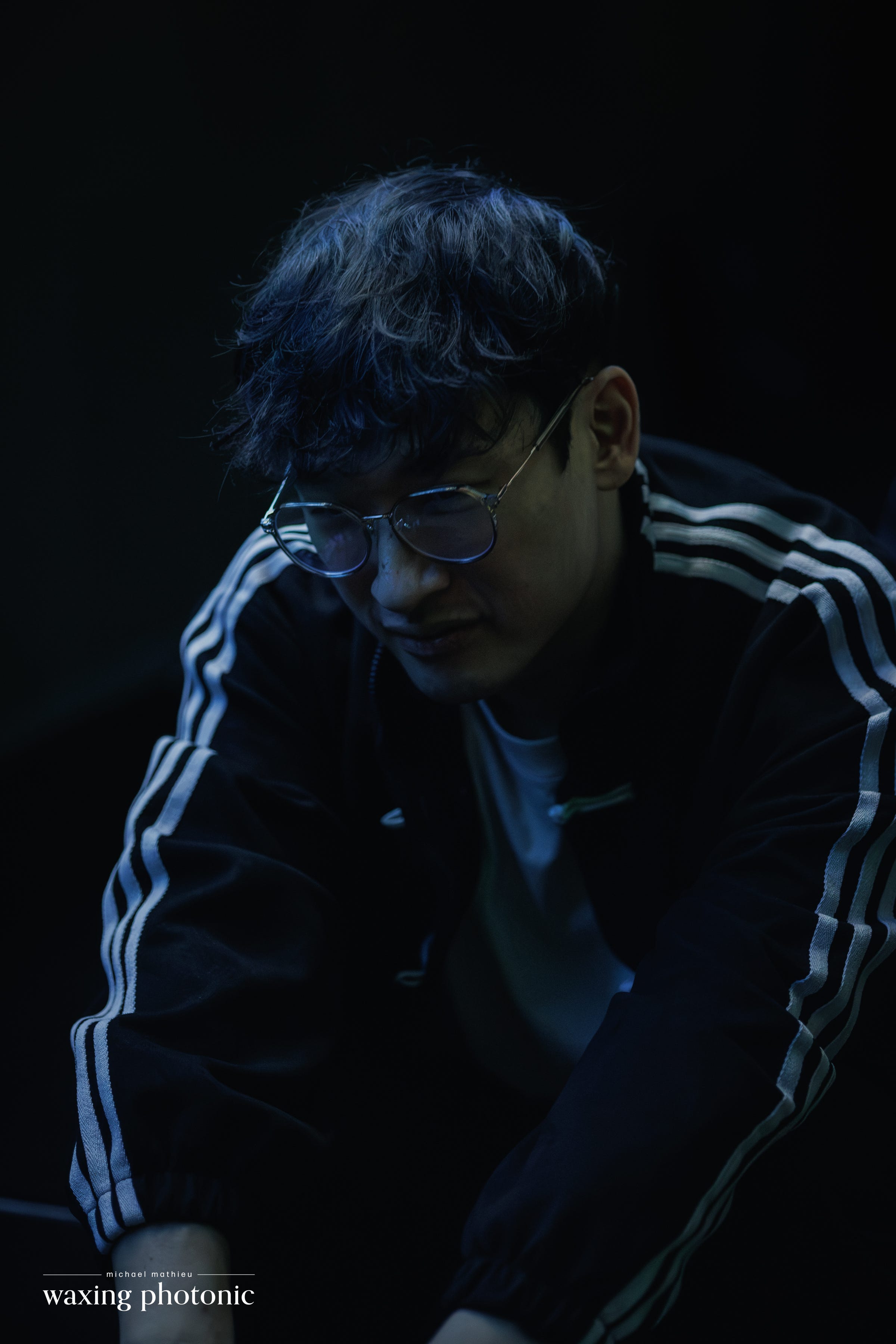
I also found moments off the floor to be deeply interesting. Tze looking like he’s preparing to drop his first album became one of my favorite photos of the event, and I’m happy that he still uses it today to represent himself for Spooky, his other event.
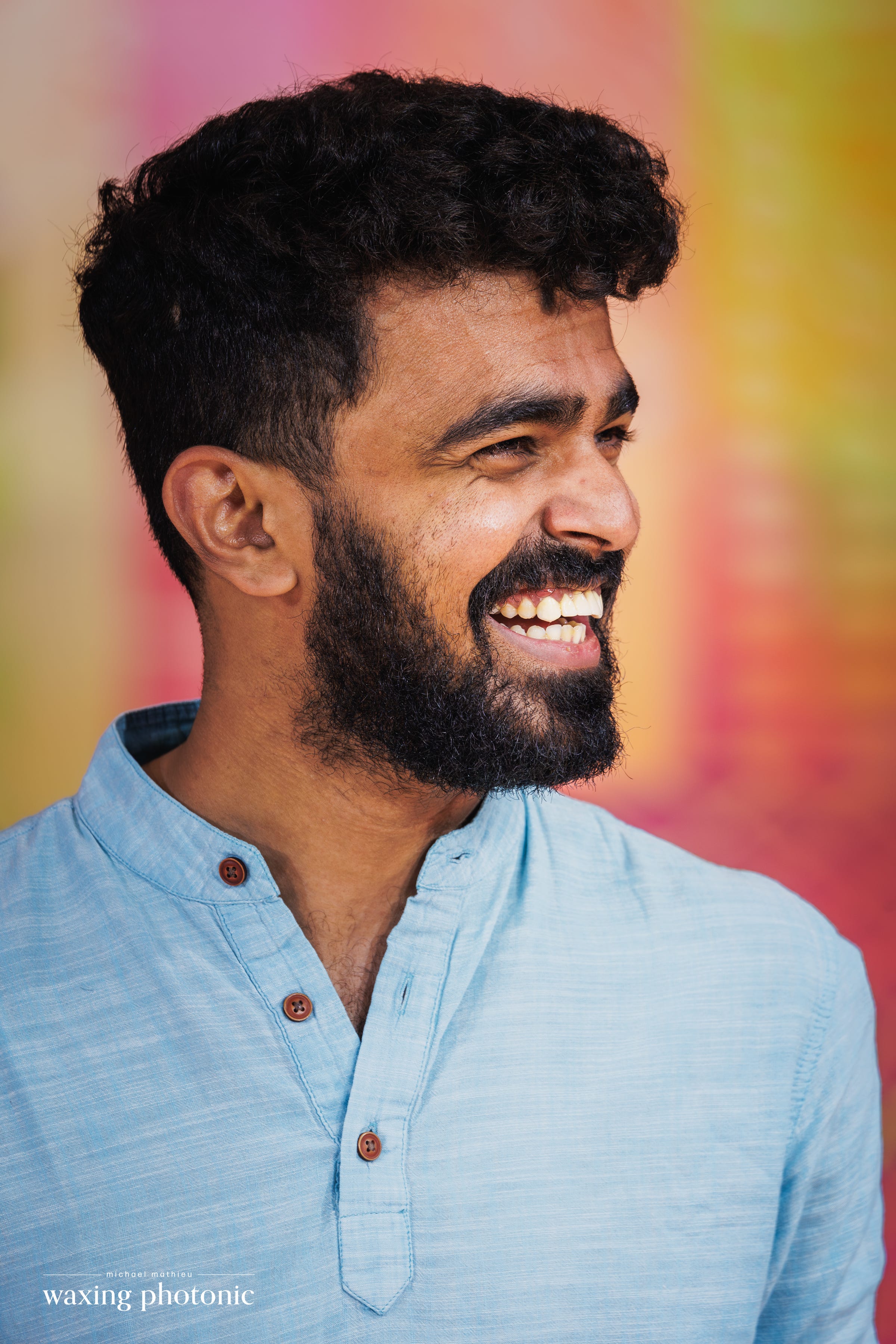
Competitions were another story. I again focused on finding faces that I knew in order to learn better what photos were worth taking. That mostly meant the judges - the people I’d been crossing paths with for years. I found Neil in a laughing moment mid-judging here - and the color palette is very appealing.
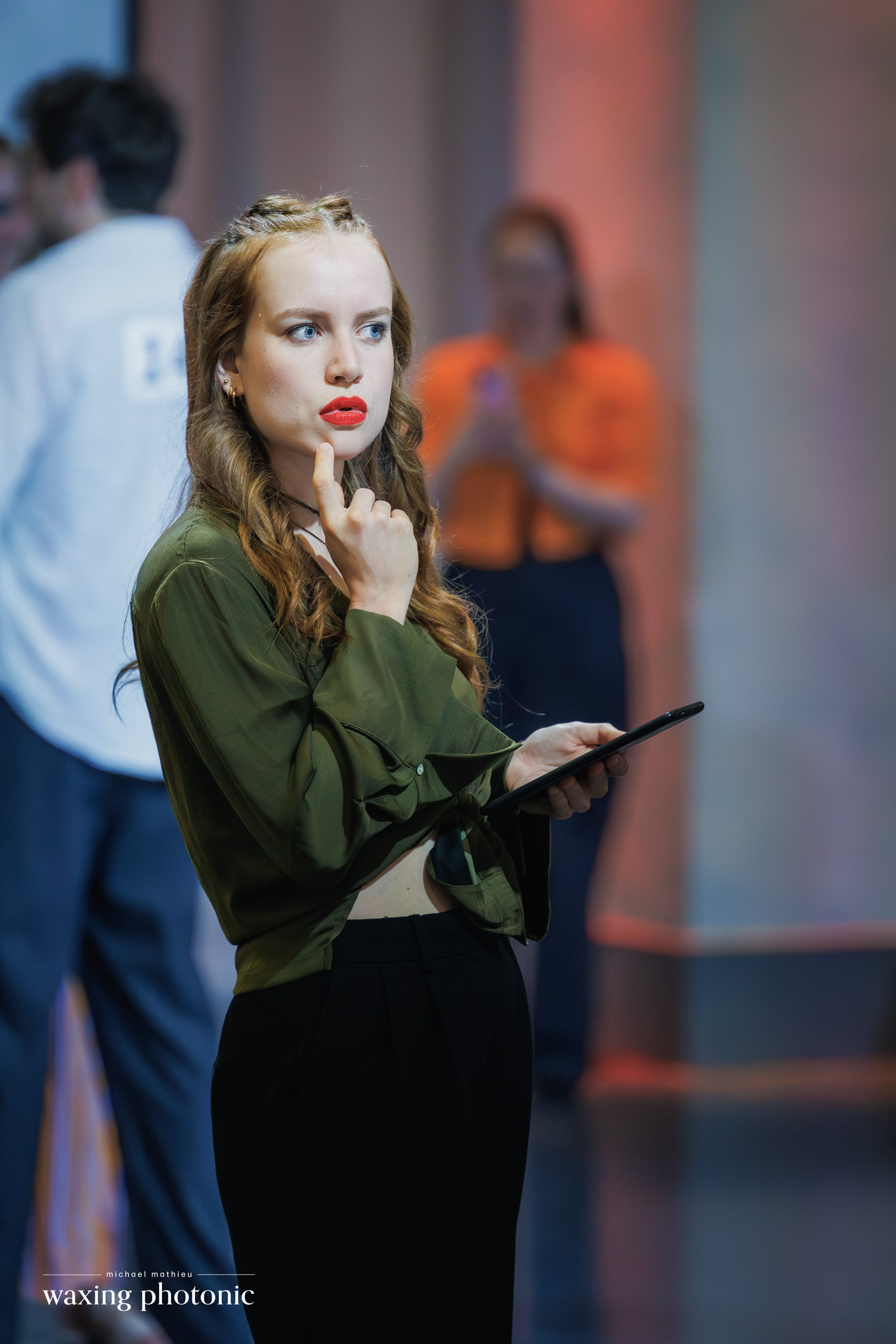
Tablet-in-hand moments had a lot of deadpan, but also a lot of interesting emotions. Dalena’s almost-regal demeanor in this photo isn’t what you’d expect from a dance event photo - but for me it’s art.
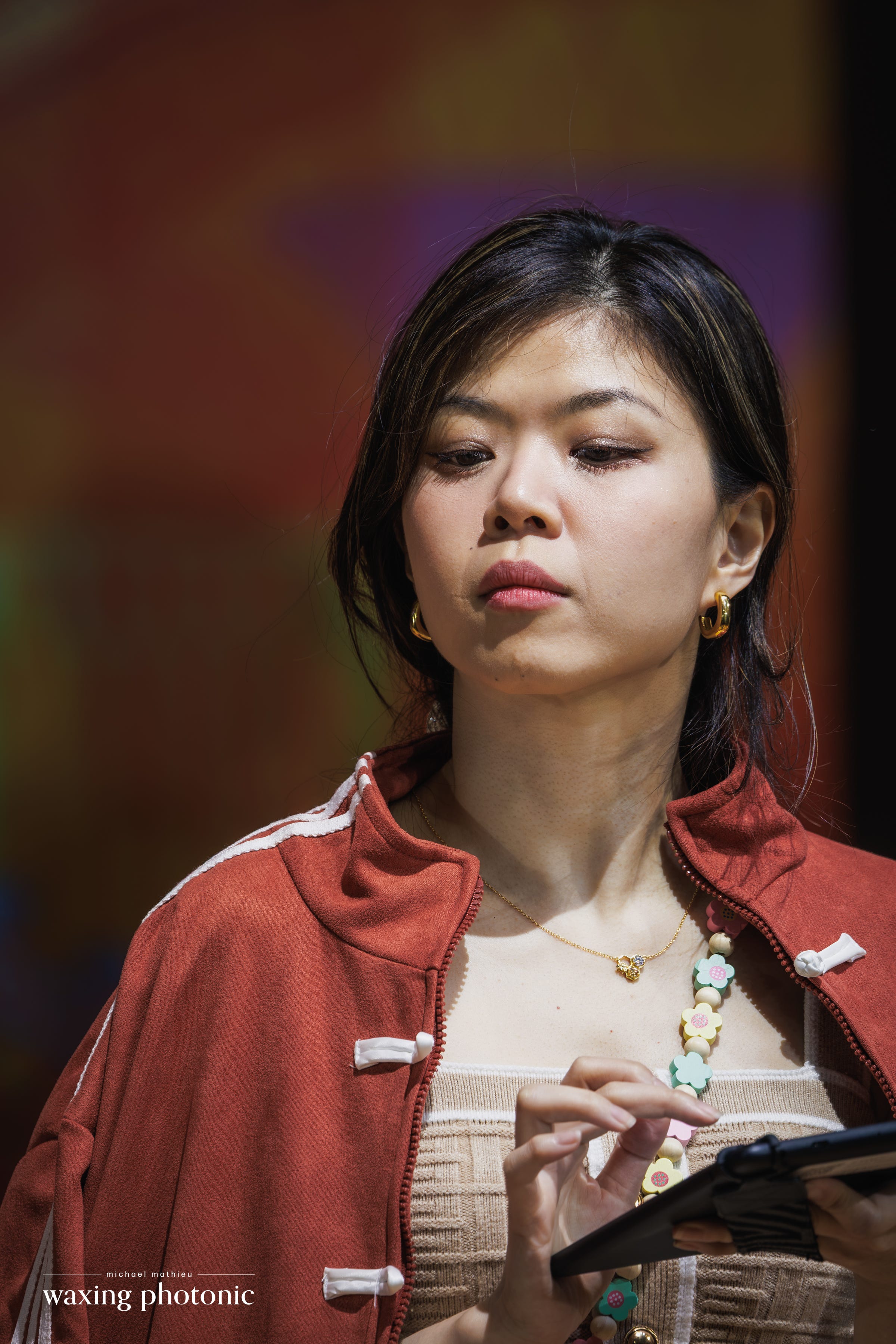
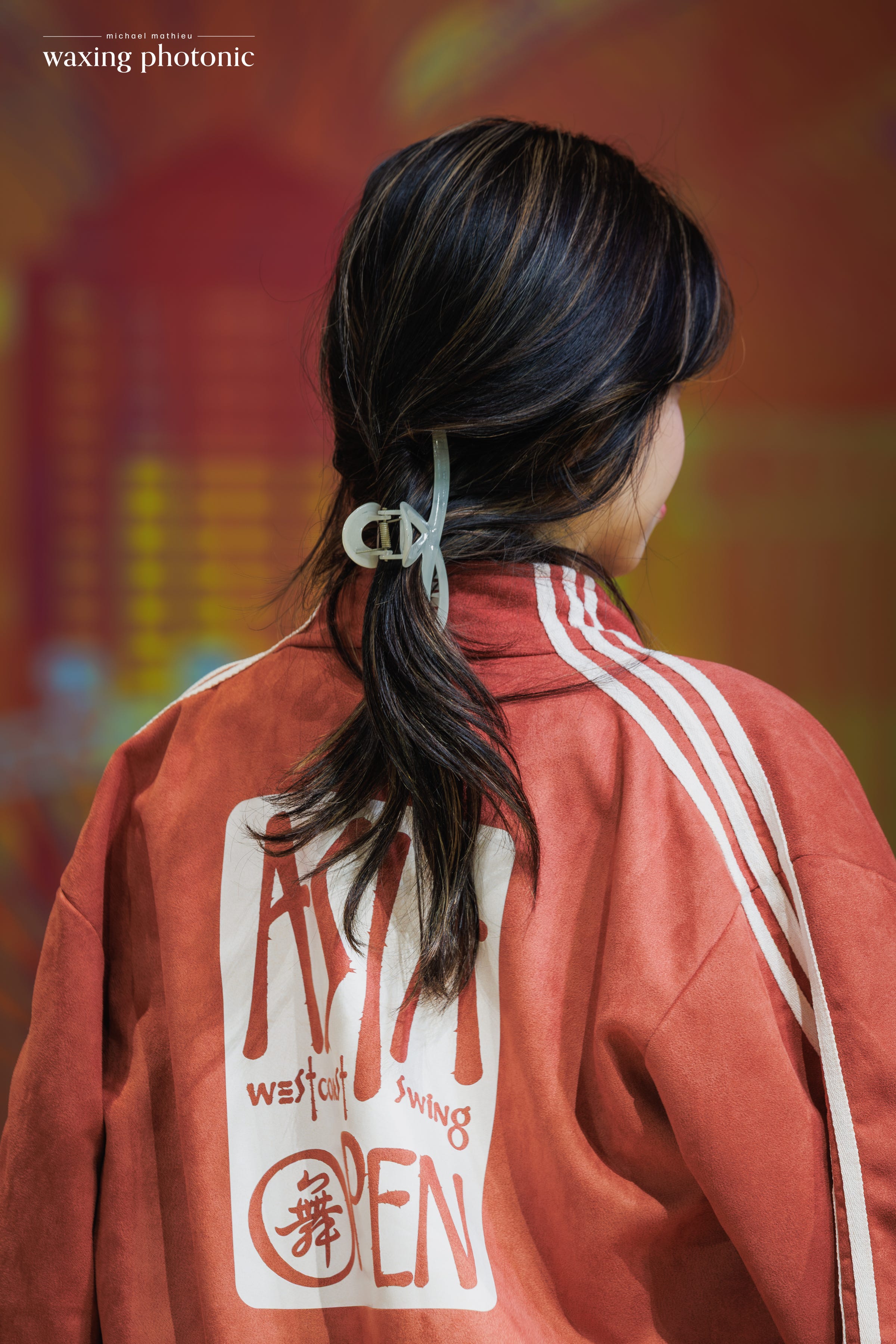
A few minutes later, Dalena was the subject of my first event logo swag portrait, and I have tried to create interesting ones at the events where I find the opportunity. It’s also the first photo I posted on my photography Instagram.
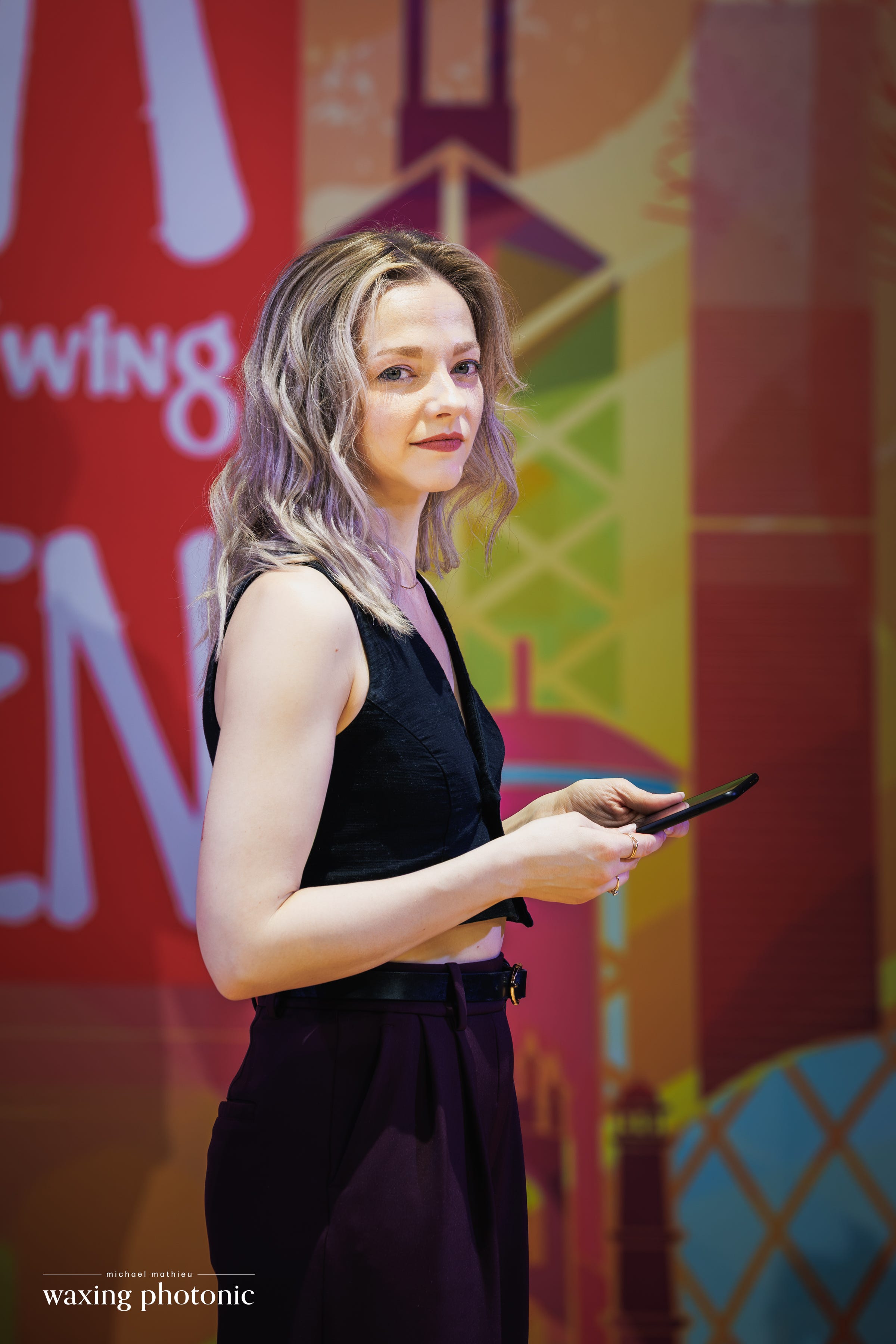
My photography style has established itself in half- to three-quarter-length portraits over the past six months, especially for stationary subjects. This shot of Lauren, at three-quarter length, is one of the first examples of what has become my most common judging photo framing.
I could spend forever on Asia WCS Open and what I learned, but there’s a lot of time between then and today, so I’ll just share three more photos from it.
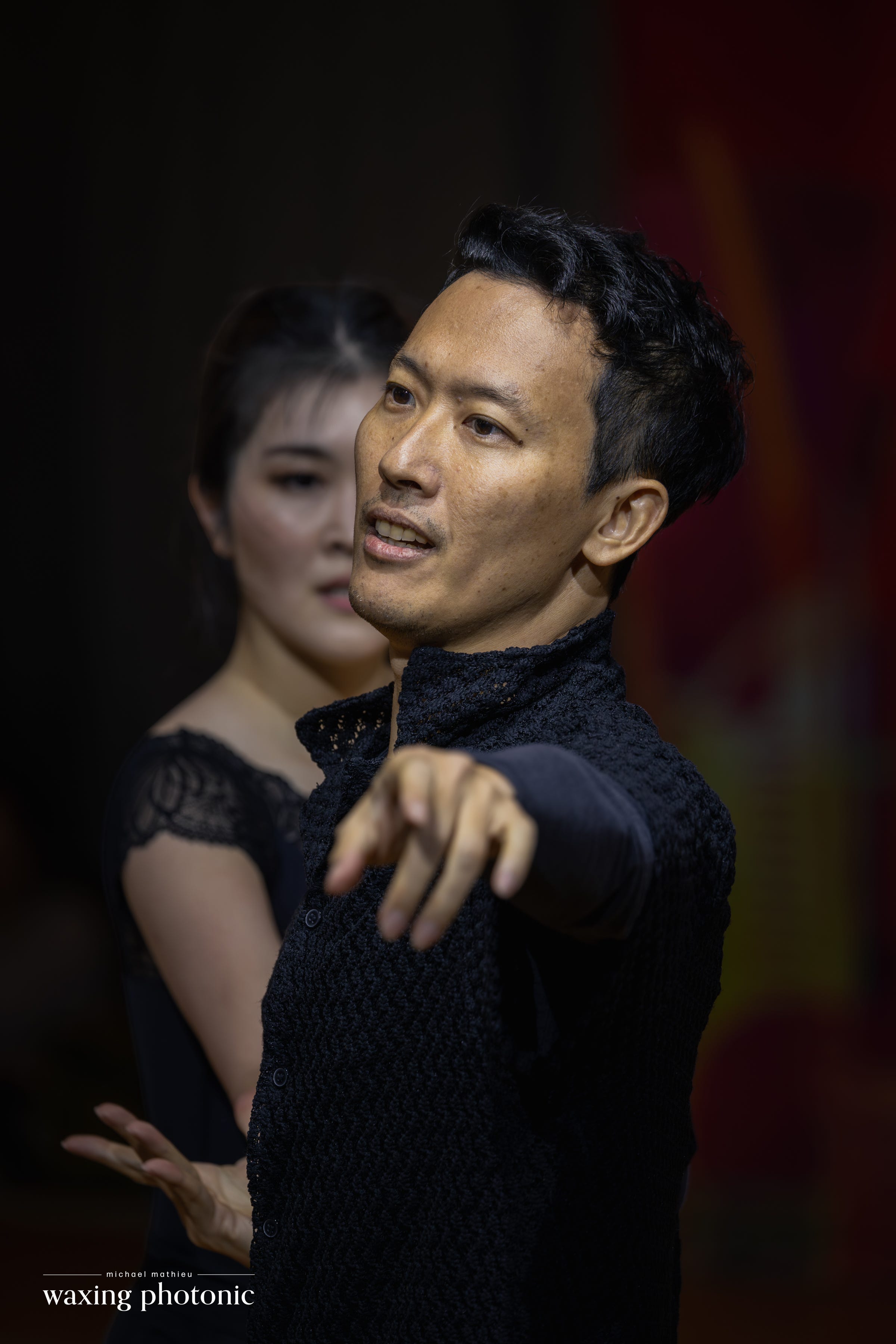
The first is my favorite photo from the routine divisions - Ming in the foreground, Althea behind. The drama, the point directly at the camera, the clarity. This photo was the first that I just sat and stared at for a few minutes.
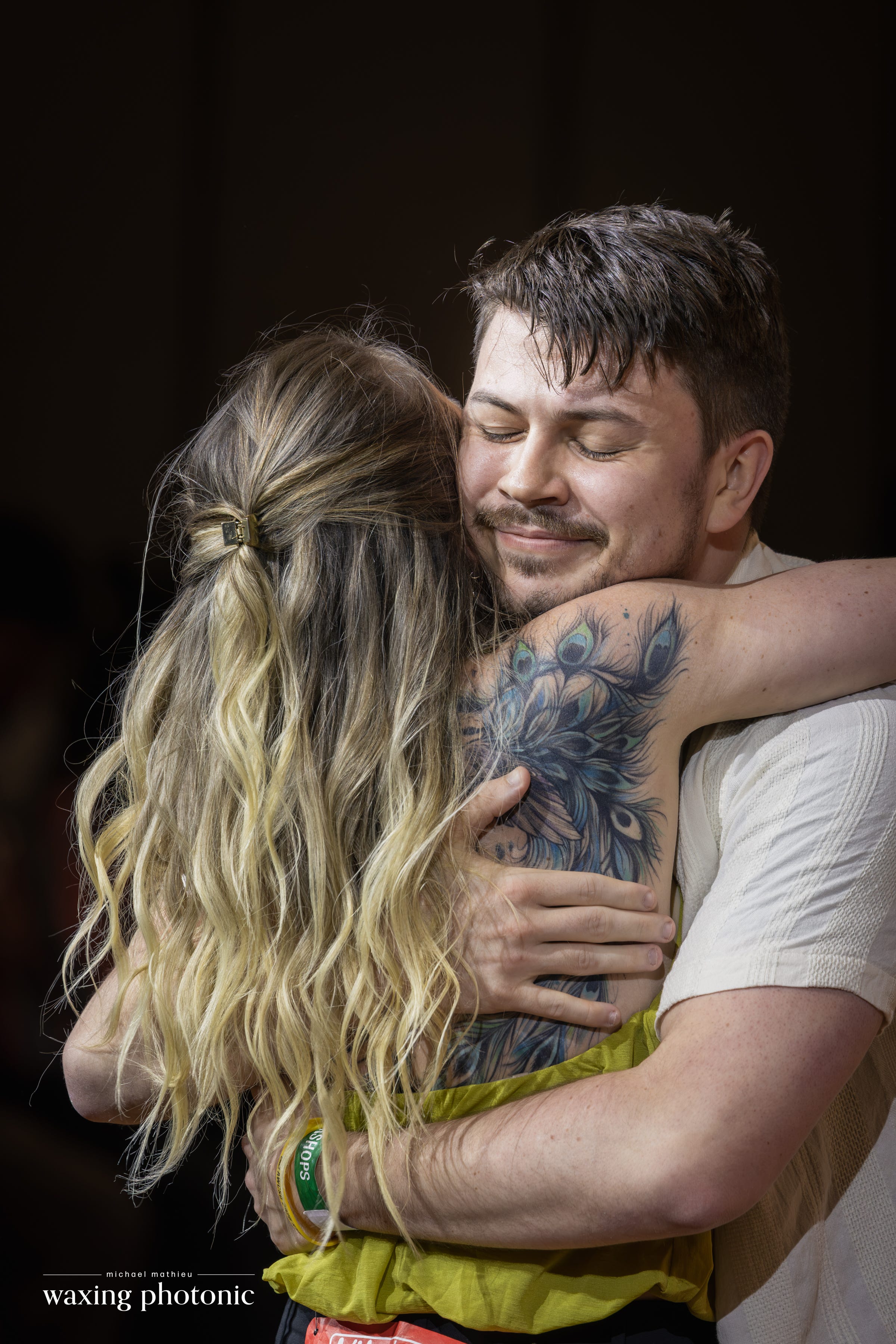
The second is a hug between Aymeline and JP after their dance in the J&J Prelims. I love the comfort of the moment, and also the clarity of the tattoo.
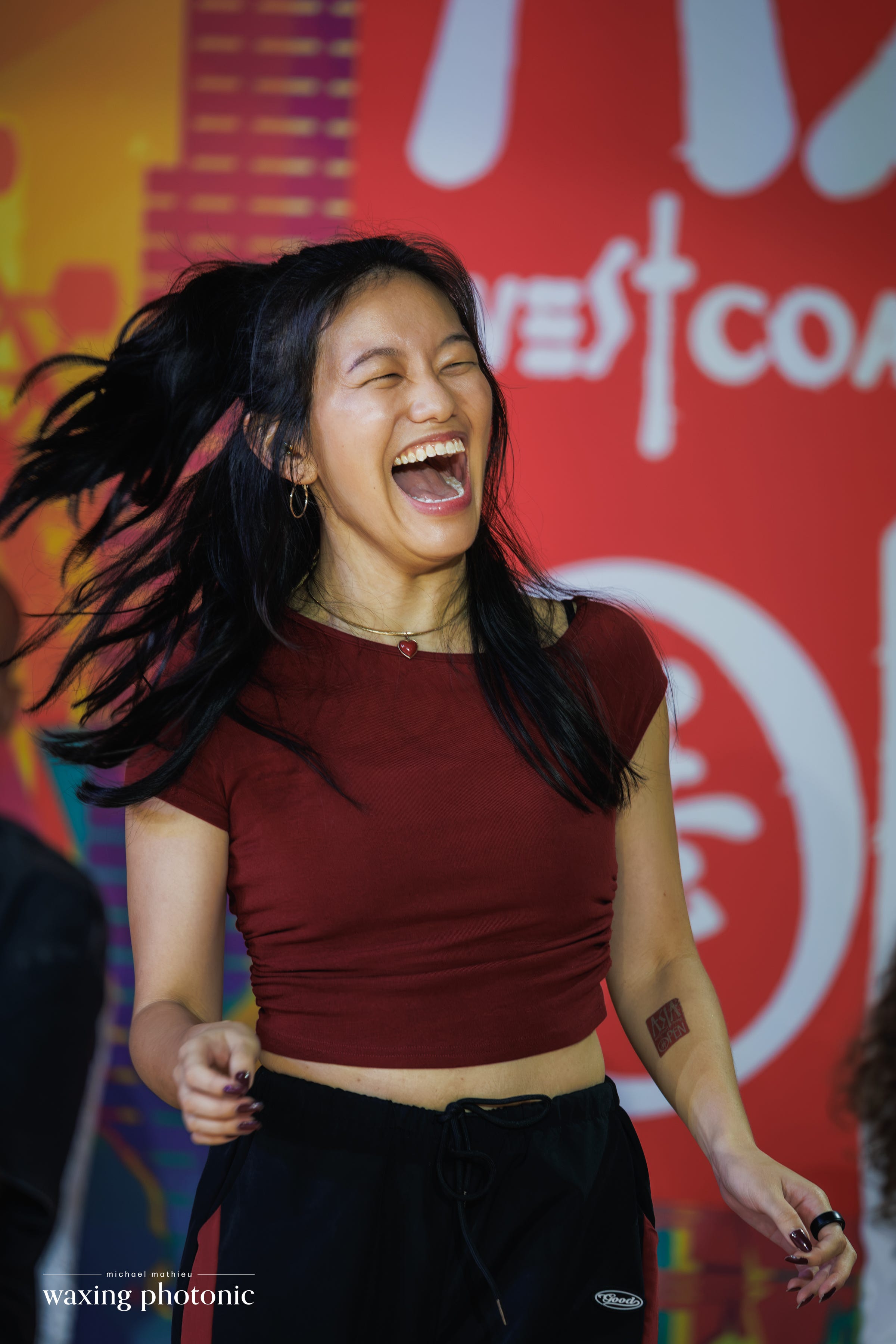
The third is the moment of absolute joy that Alyssa had when she realized she drew Sean McKeever for the pro-am final.
At this point, I was hooked - taking photos during the event gave me so much joy, especially when the people I took photos of were happy to see them.
Nordic WCS Champs, May 2026
My next event was Nordic WCS Champs in Stockholm - immediately after my return from Asia. That event was more challenging to shoot; Asia WCS Open had a very robust spotlight system, whereas the lighting at Nordic had interesting frontal lights but no dedicated spotlight. I didn’t have a fast lens at that point, but I still created some interesting things with the lighting.
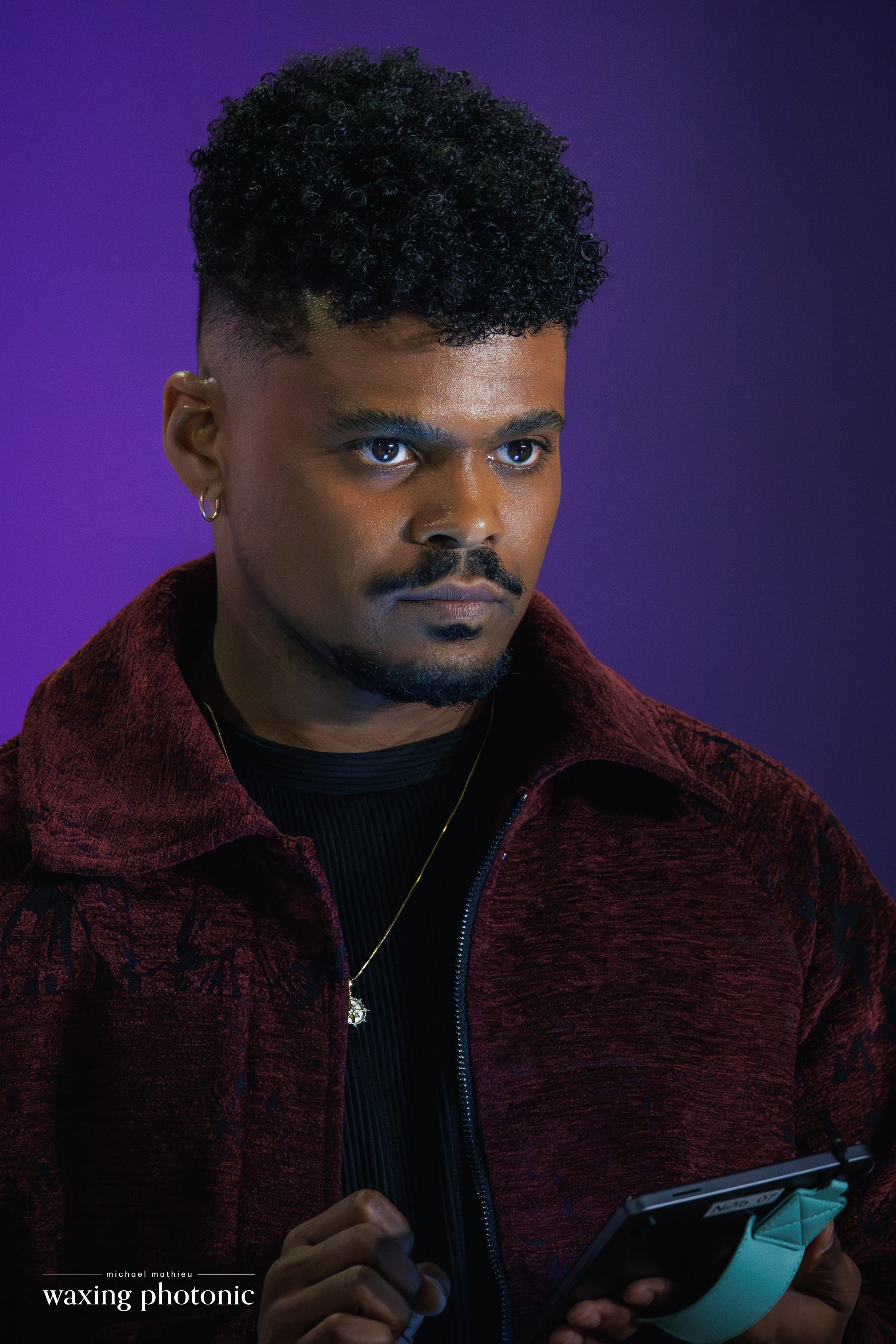
The first was this tight judging portrait of Igor. It’s a serious judging moment, the color composition all works together, and the light lands perfectly on his face.
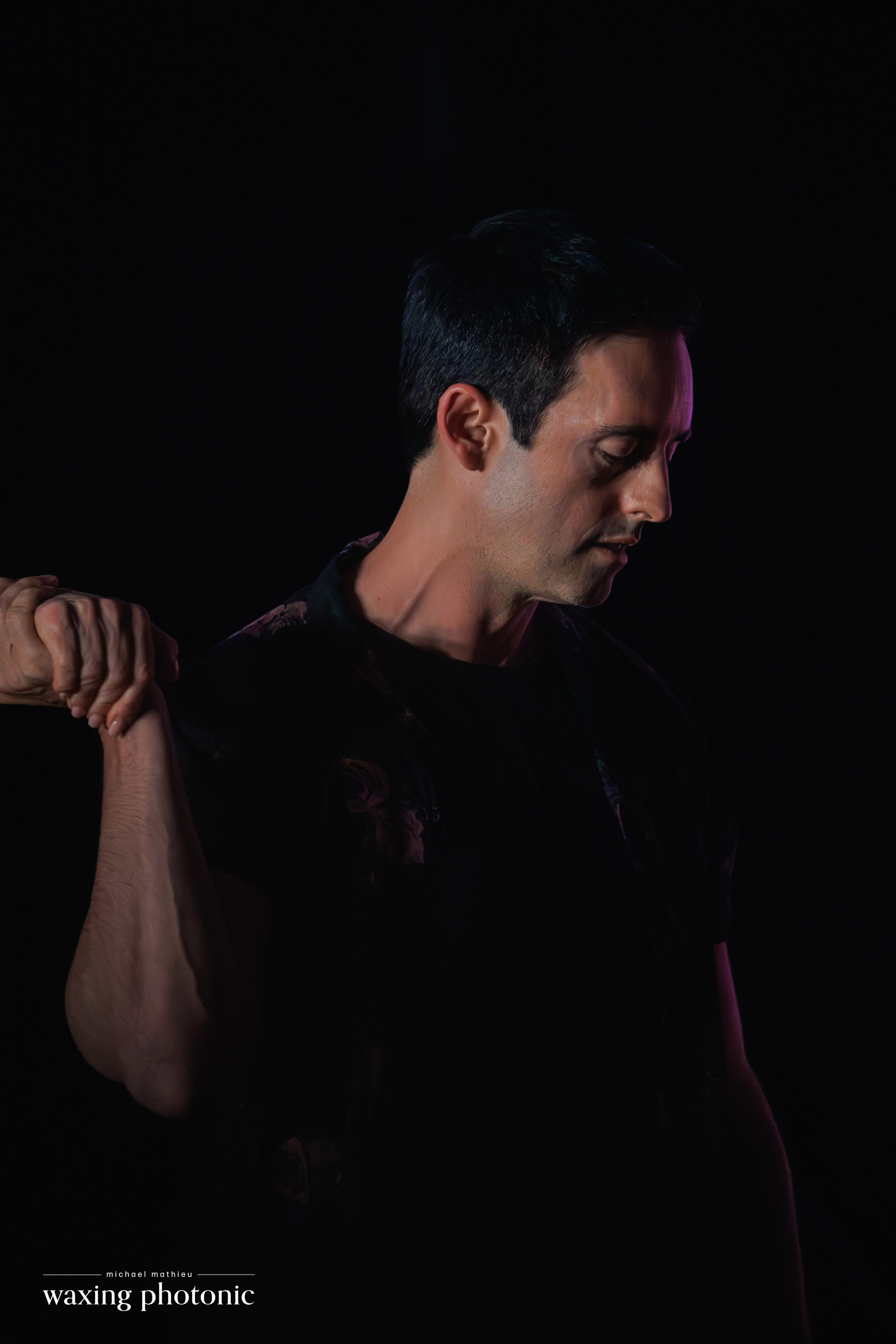
This next shot is a very low-light dance portrait of Jordan during the pro show. To this day, this is still one of the best portraits I’ve taken of a dancing subject. The lighting is absolutely perfect here, highlighting only his skin and the bright points on his shirt.
This dark style also worked with the crowd at the back, as in this photo of Manxi. I experimented with standing behind the dance here, and while I didn’t love the way the lighting turned out overall, it was mostly an issue of not having the right equipment, not necessarily of it being a bad angle.
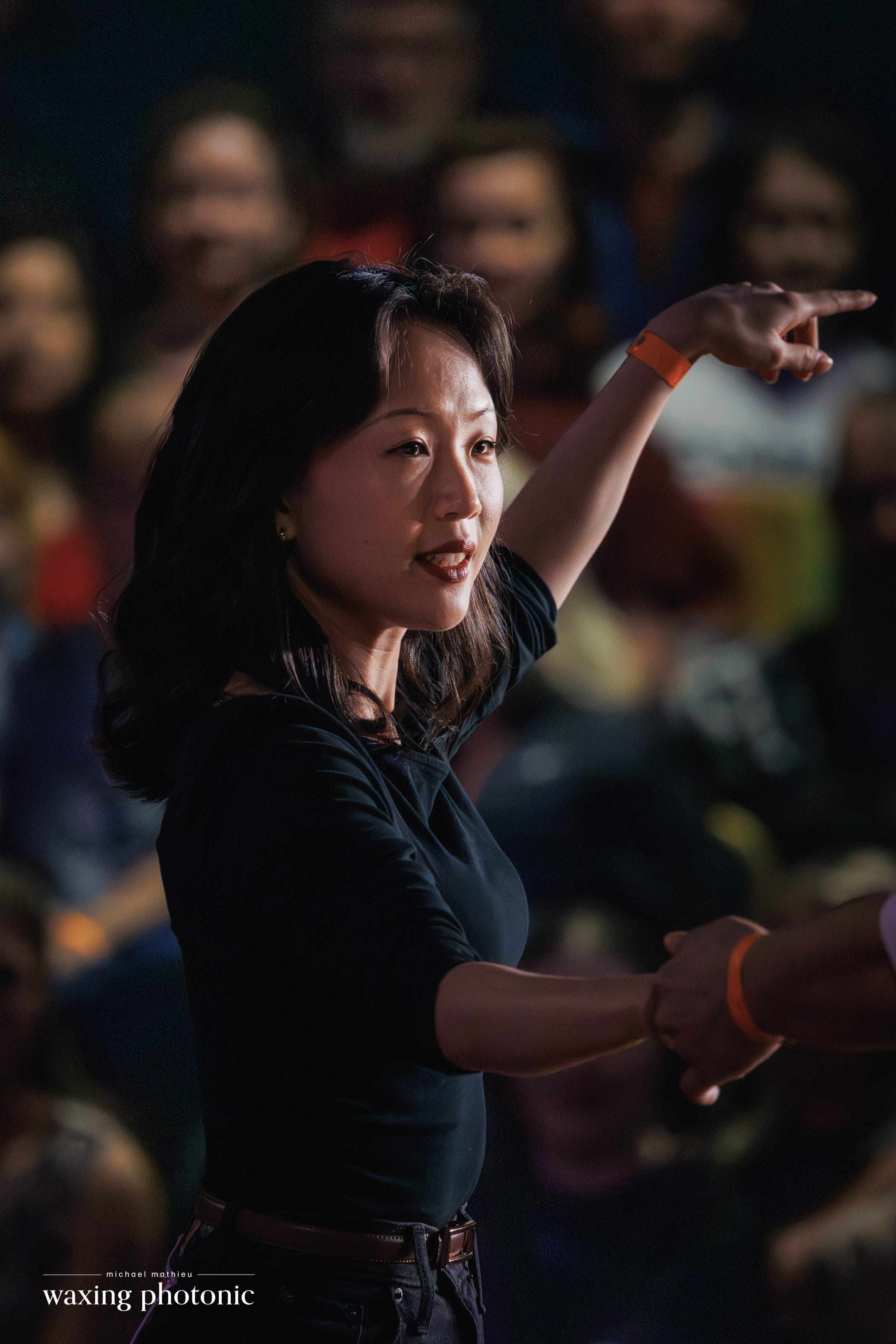
Here we have a mid-action dance photo of Irina and Piotr. It took me a while to figure out what makes a good mid-action dance photo, but this was one of my first that I look back at today and am happy with.
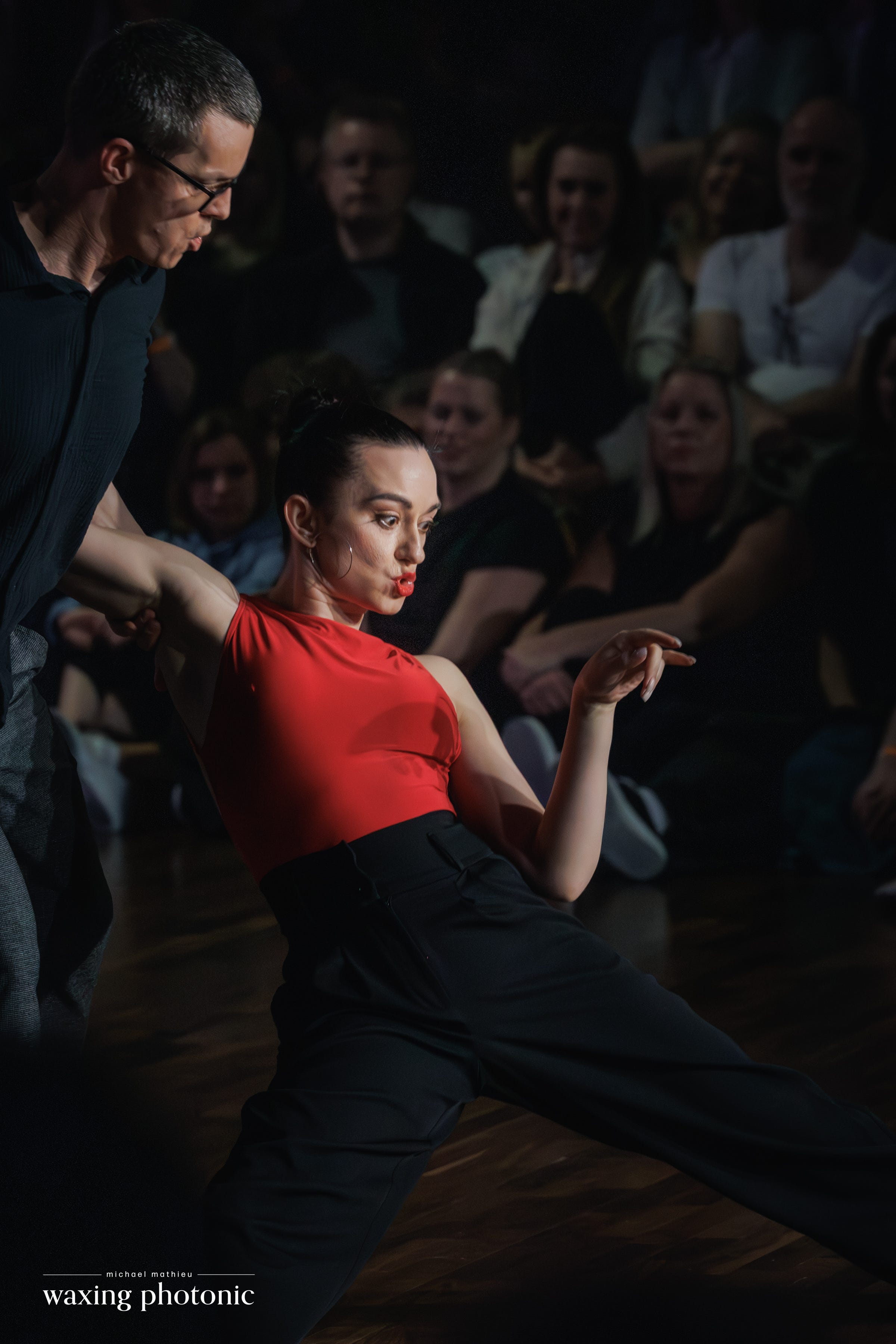
Finally, another of Irina, this time in the middle of the crowd under a spotlight. This photo again carries depth of feeling in part due to the concentration of light, and the people up front as a foreground give it an extra bit of energy towards the couple.
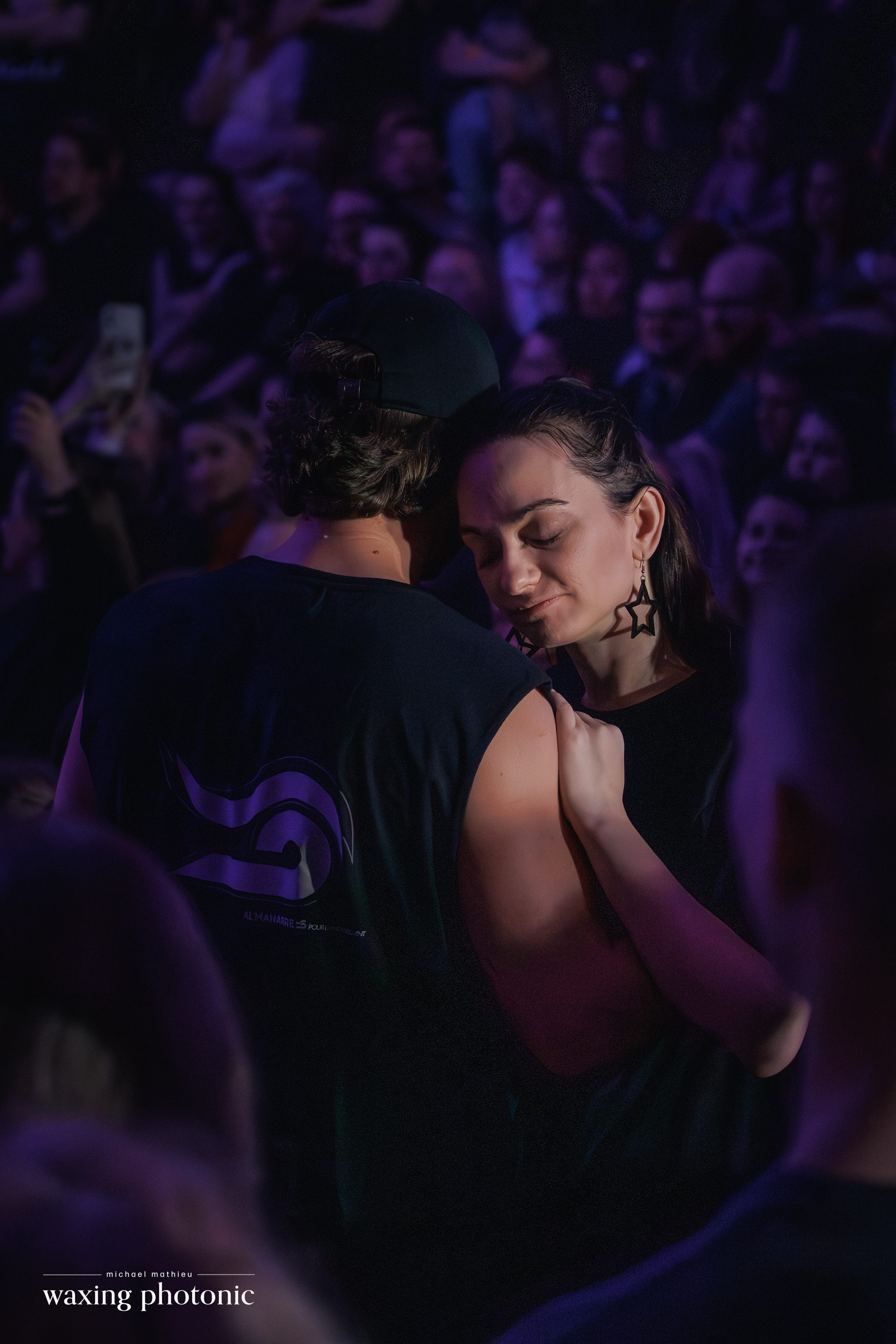
I was happy with the photos I was creating at this point, but Nordic showed me that light was really going to be a struggle with my gear setup. If I wanted to do photography at dance events and do it well, I needed a faster lens than the large telephoto I was using; it was not giving me nearly enough light.
In the time before my next event, I invested in a lens that is normally used for weddings and other low-light events. It made a world of difference.
Baltic Swing, June 2026
Baltic was a turning point in my dance photography. I no longer had to fight with low light in the ballroom, as my lens was now fast enough to manage it properly.
Now I could capture photos like this one of Sebastian, waiting for his turn in the Strictly finals. I had about three times as much light available as before, which made for much cleaner and crisper colors, both foreground and background.
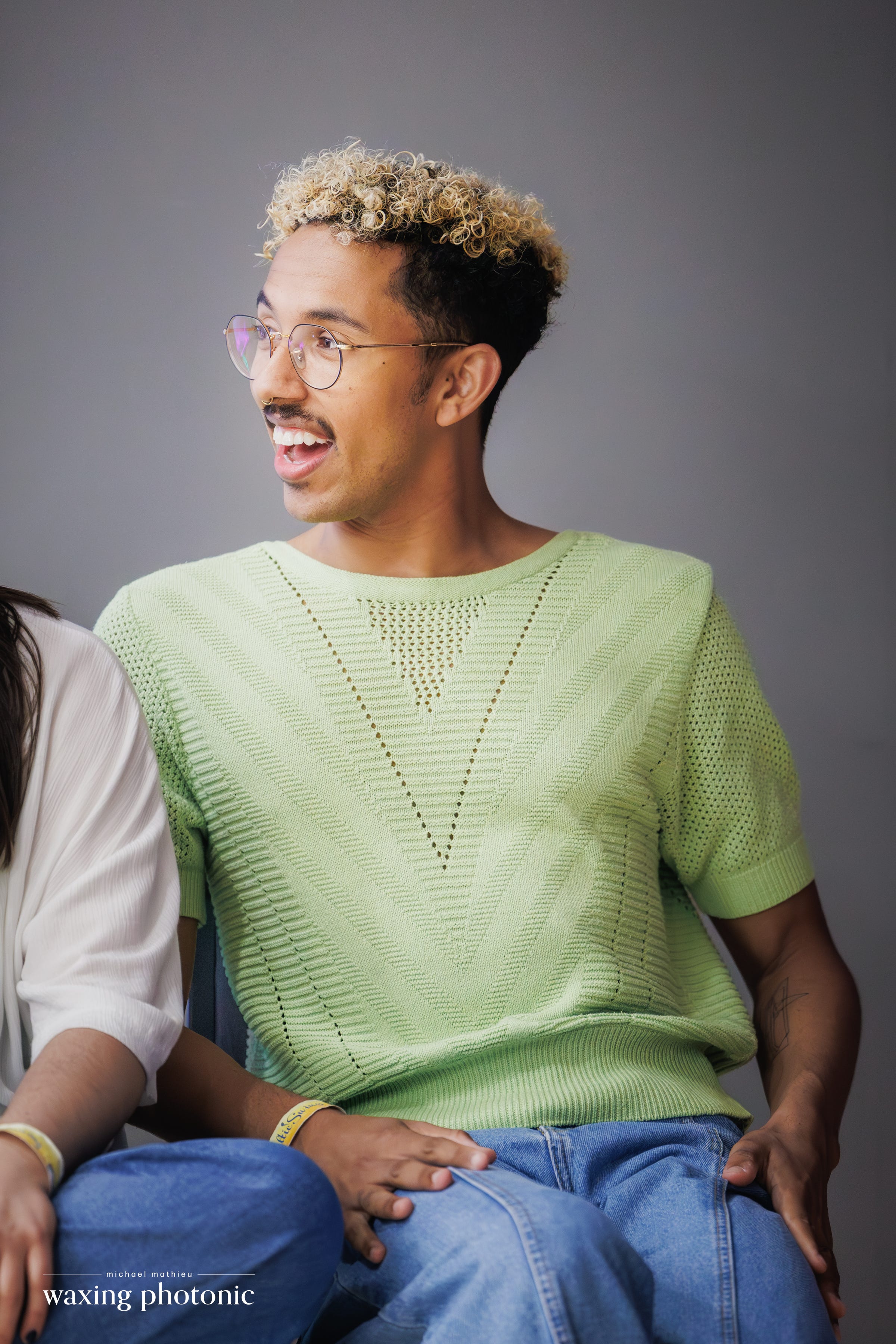
This exact spot on the background gave me other great photos throughout the weekend, such as this mid-action tight portrait of PJ. The depth of the laugh here stands out against the quiet background, and the added warmth carries the joy further.
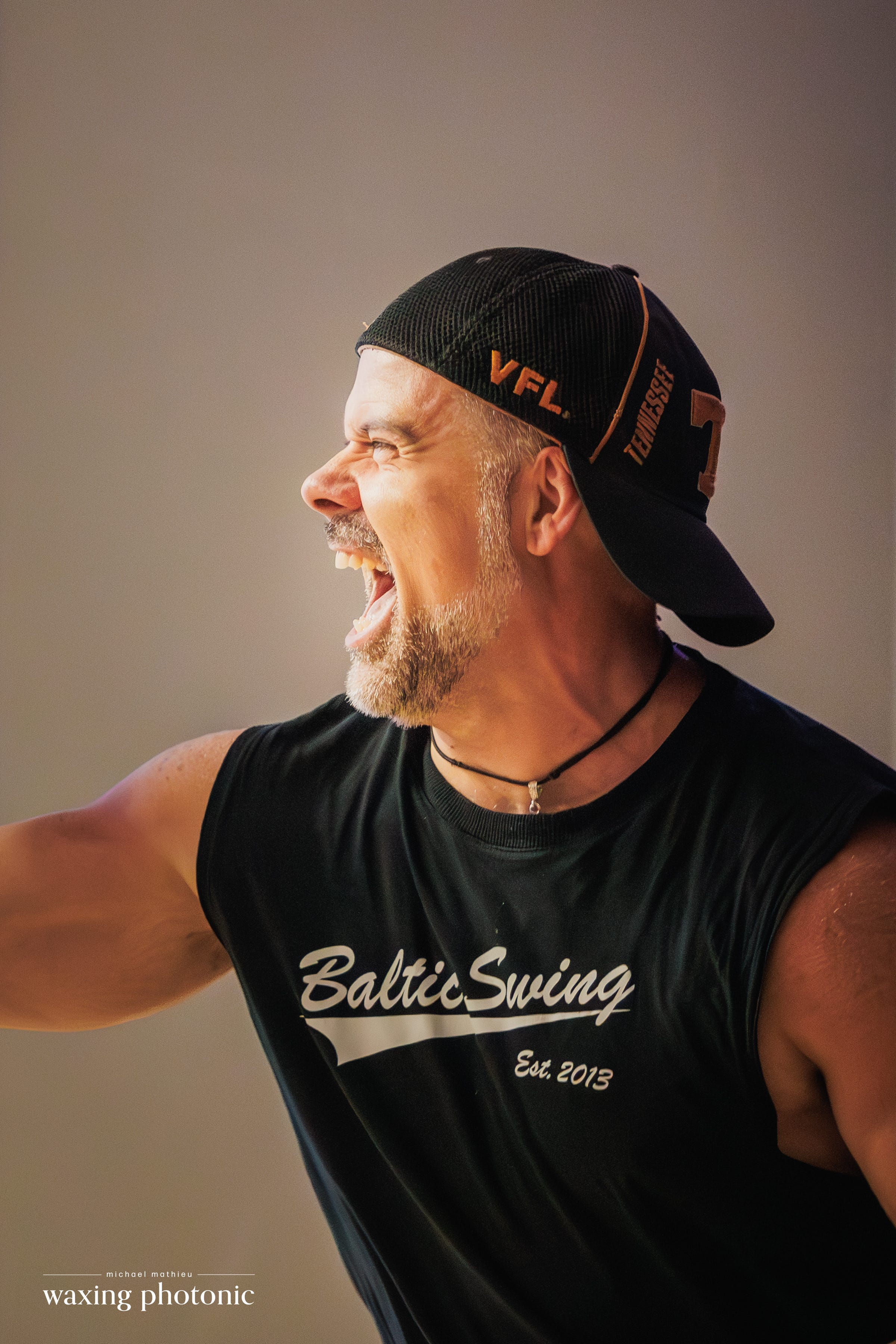
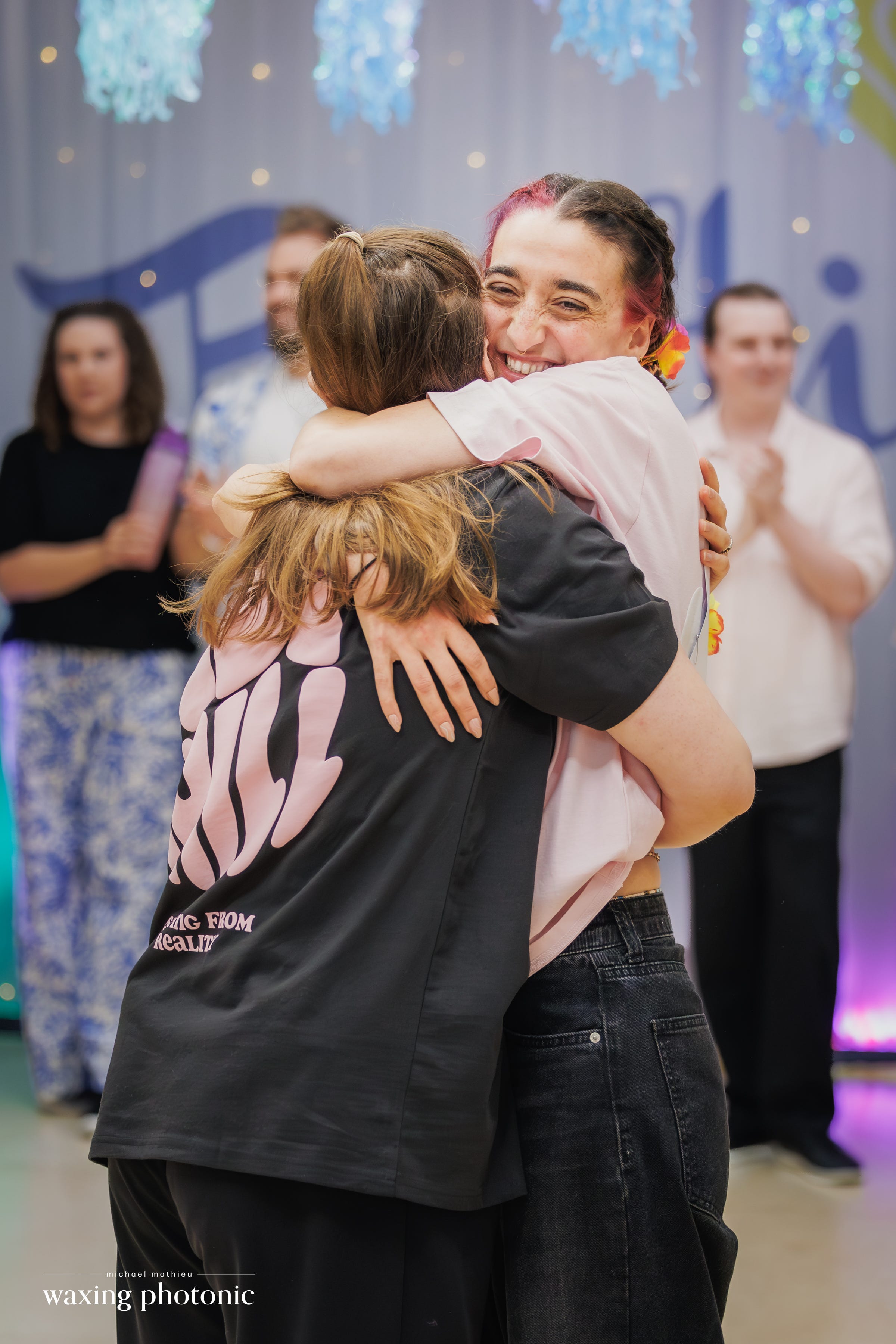
This next photo is a return to the hug. Melina was the first person I gave a question to, setting the format that I still use today of four photos plus an answer. Her exuberant joy comes through in all of her hug photos.
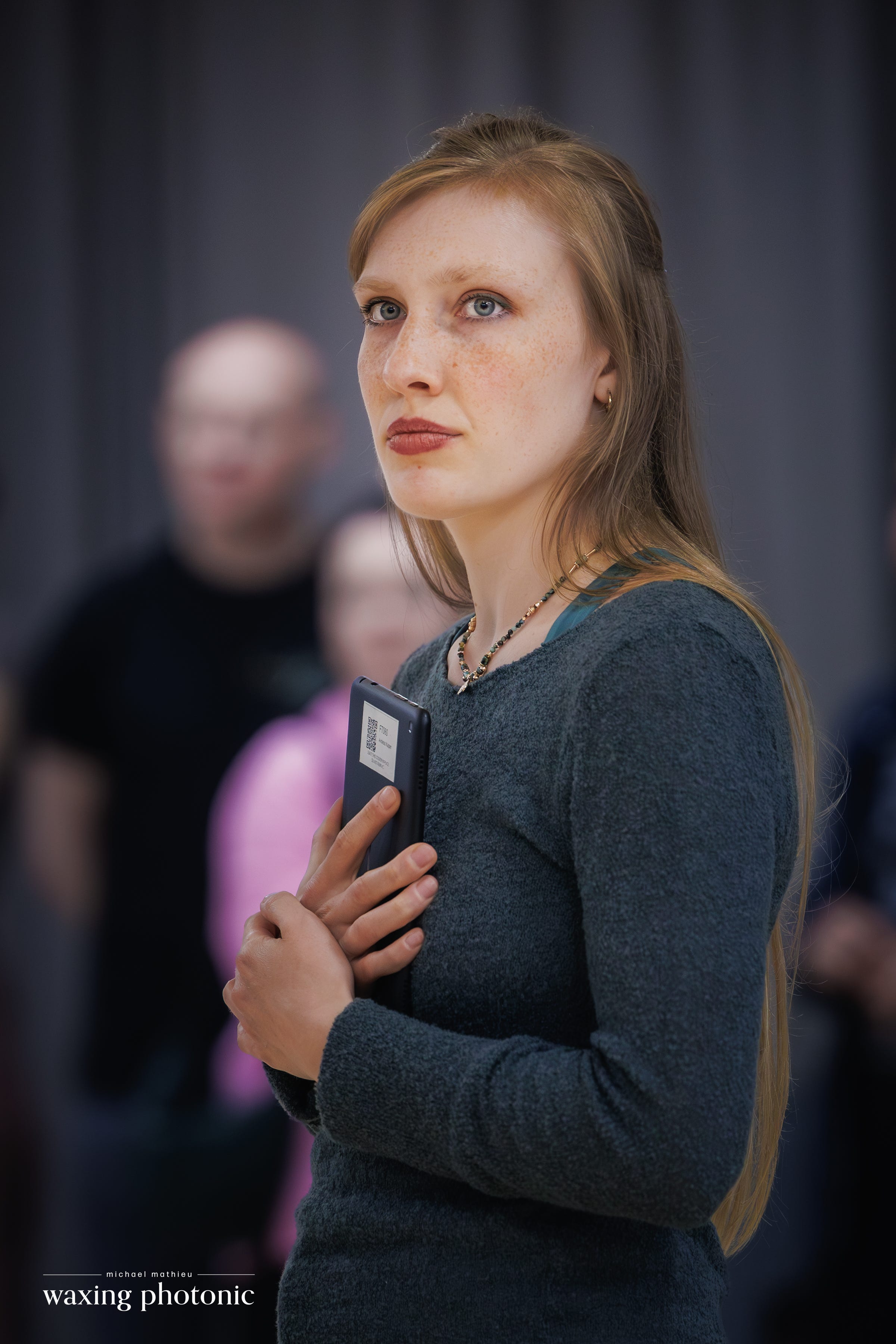
I stuck to the concept of the judging photo, as it kept giving me moments that became spectacular photos. This photo, featuring Muriel as judge, is crystal clear, with strong dark tones and a pink color pop in the background that accents it well.
Finally, I also experimented a bit with landscape format at Baltic, as with this photo of Max and Melina. Today, I shoot landscape dance photos once in a while, but I primarily stick to portrait due to Instagram’s formatting.
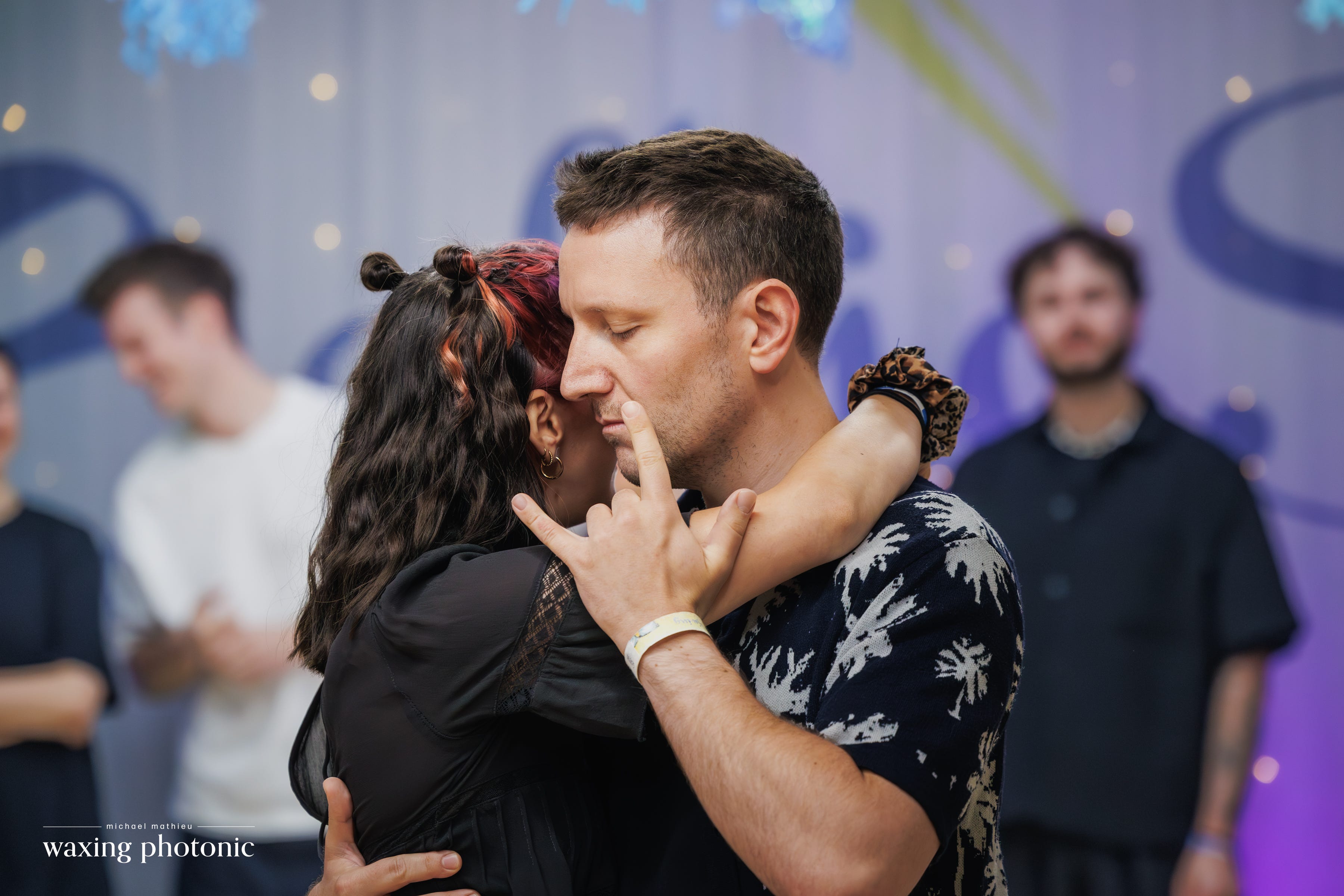
At Baltic, I started to figure out that I didn’t particularly enjoy being straight-on to the dancers, instead preferring to shoot at a 30-45 degree angle off the slot - in part to find an easier background to work with. I have tried to go back once or twice towards the front of the room, but have always returned to a side angle - it speaks better to my style of single-dancer portrait capture.
SwingLab Berlin, July 2026
SwingLab brought with it new challenges, as it had both highly concentrated top lights and a reflective floor. I also wound up at times too far towards center or too far away from the dance. I managed to capture shots I was happy with, but it was possibly my worst performance from a photo quality standpoint.
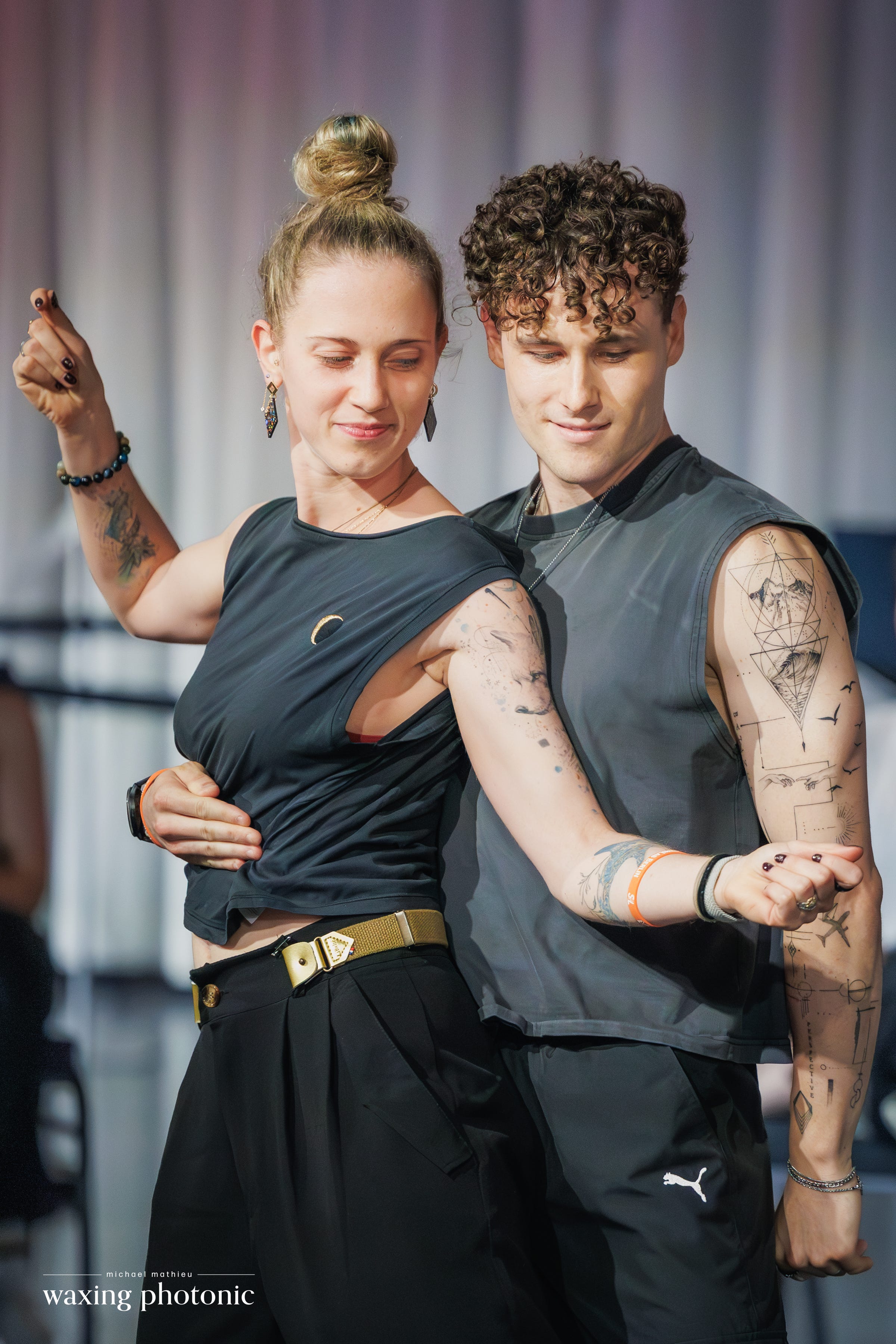
For some reason, tattoos come out really nicely in the photos I take, such as with the photo of Aymeline’s back earlier in the post. In this photo, of Chris and Helene, the arm tattoos of both are very prominent - and my post of Chris was in part about his.
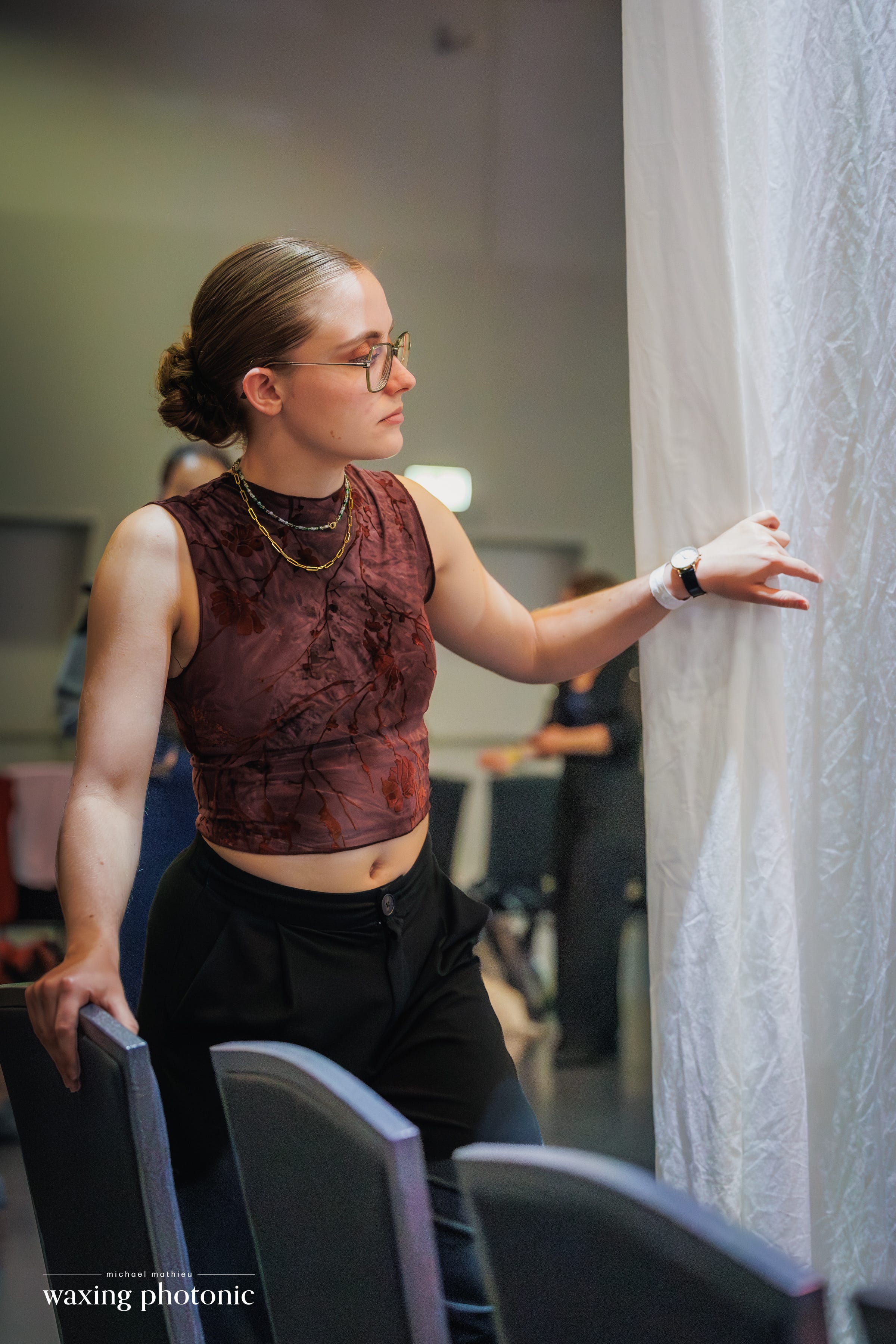
One thing I found at SwingLab was that I can also capture interesting artistic moments on the side of the floor. I try not to do this too often, as I’m pointing a big lens at random people, but once in a while I capture something great - like this portrait of Amelie, which could very well be a painting.
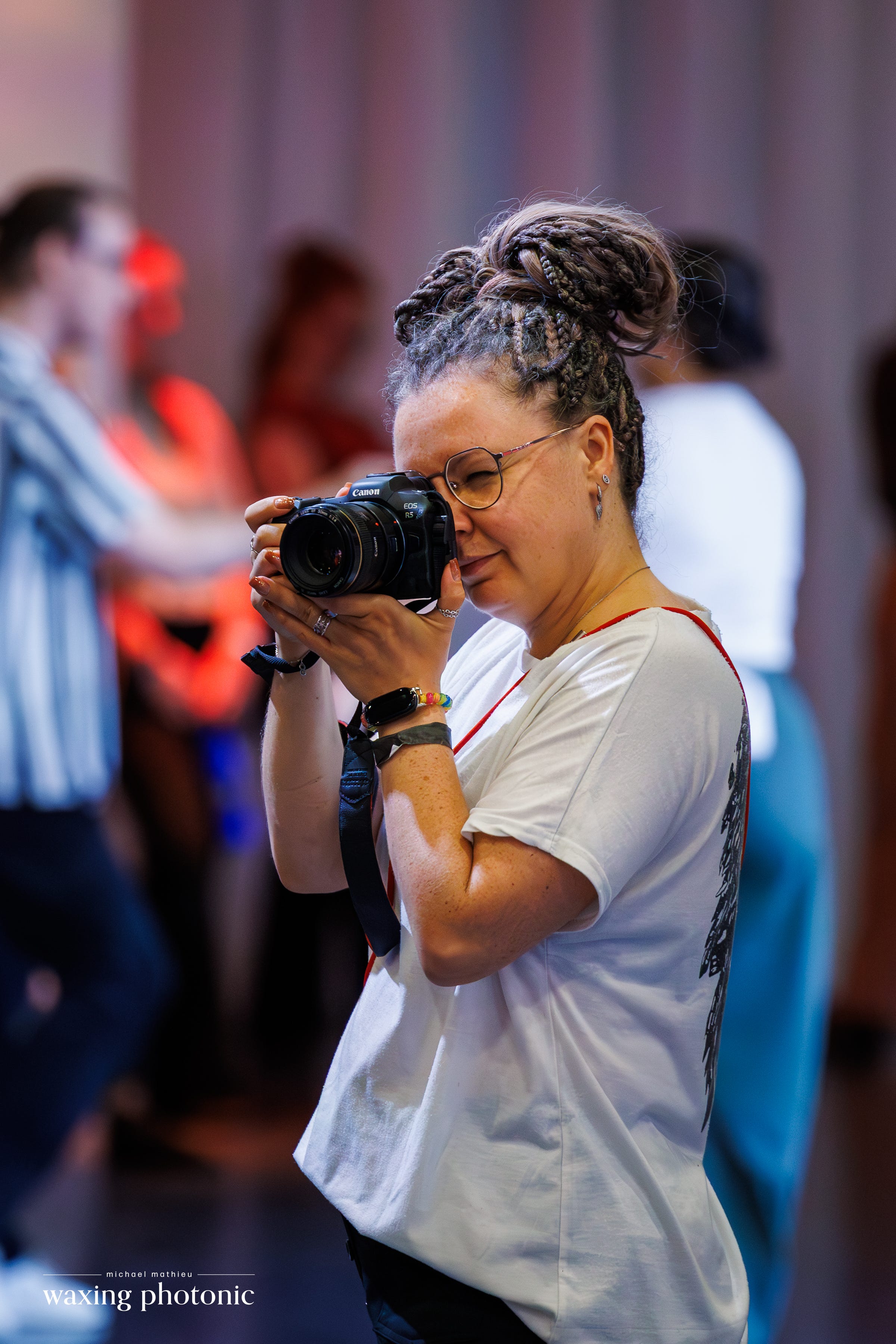
I also tried to make sure that I was capturing photos of the photographer on staff for the event - in this case, Anastasia, who photographs under the moniker Photo ShiSh. Photographers don’t really get enough photos of themselves, so it’s something I try to do for the staff photographers at each event - both behind the camera and on the floor.
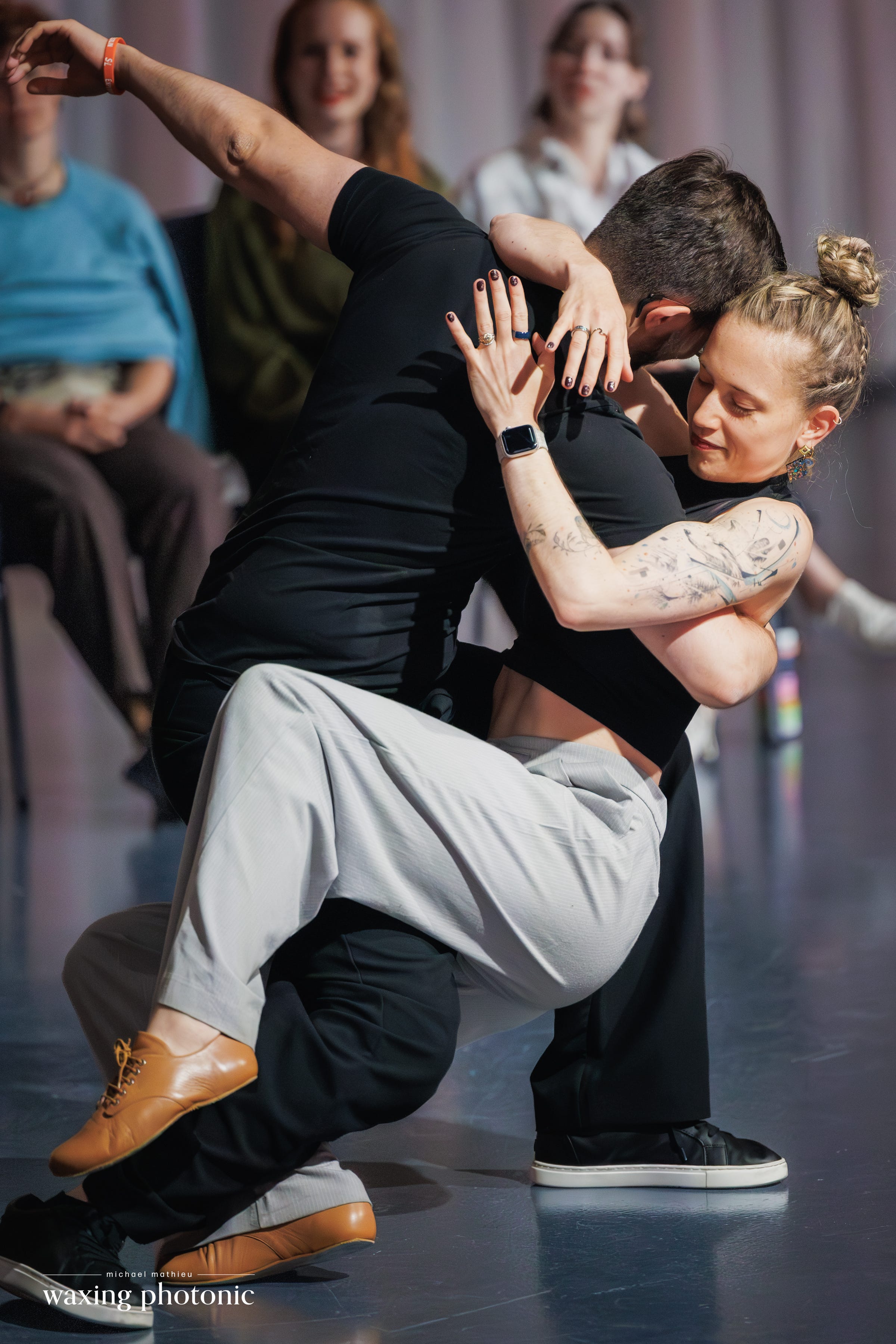
The complexity of photographing on a reflective floor becomes apparent in the action shots, especially those low to the ground. The bounce of the light was kind of nice, but it also created odd shadow patterns. This photo of Helene and Raphael manages to pop decently despite it, and I believe the question viewers asked most was “Where can I get those shoes?”
Regardless of the complexities of the room, judging shots still produced excellent portraits reliably. This three-quarter portrait of Clara gave an interesting mid-song moment, showing yet another point in the range of judging emotions.
Looking back, there were still quite a few great photos in this batch. Overall, though, the lighting was fighting me throughout the event, and taking a retrospective on photos from it taught me a lot about camera settings and positioning that I started to make use of from then forward.
End Part 1
We’ve reached the end of month three, and event four.
At this point, I’d taken well over 10,000 photos at events, and I’d learned a ton about photography. The change in lens choice before Baltic led to a clear difference in photo quality and clarity - you can scroll through and see the evolution between the first and second pair of events here.
In part 2, I’ll cover the next three months of events.
I hope you’ve enjoyed reading so far, and please make sure you subscribe for part 2!